Meet Soval: A New Way to Fact Check Anything With the Evidence to Back It Up
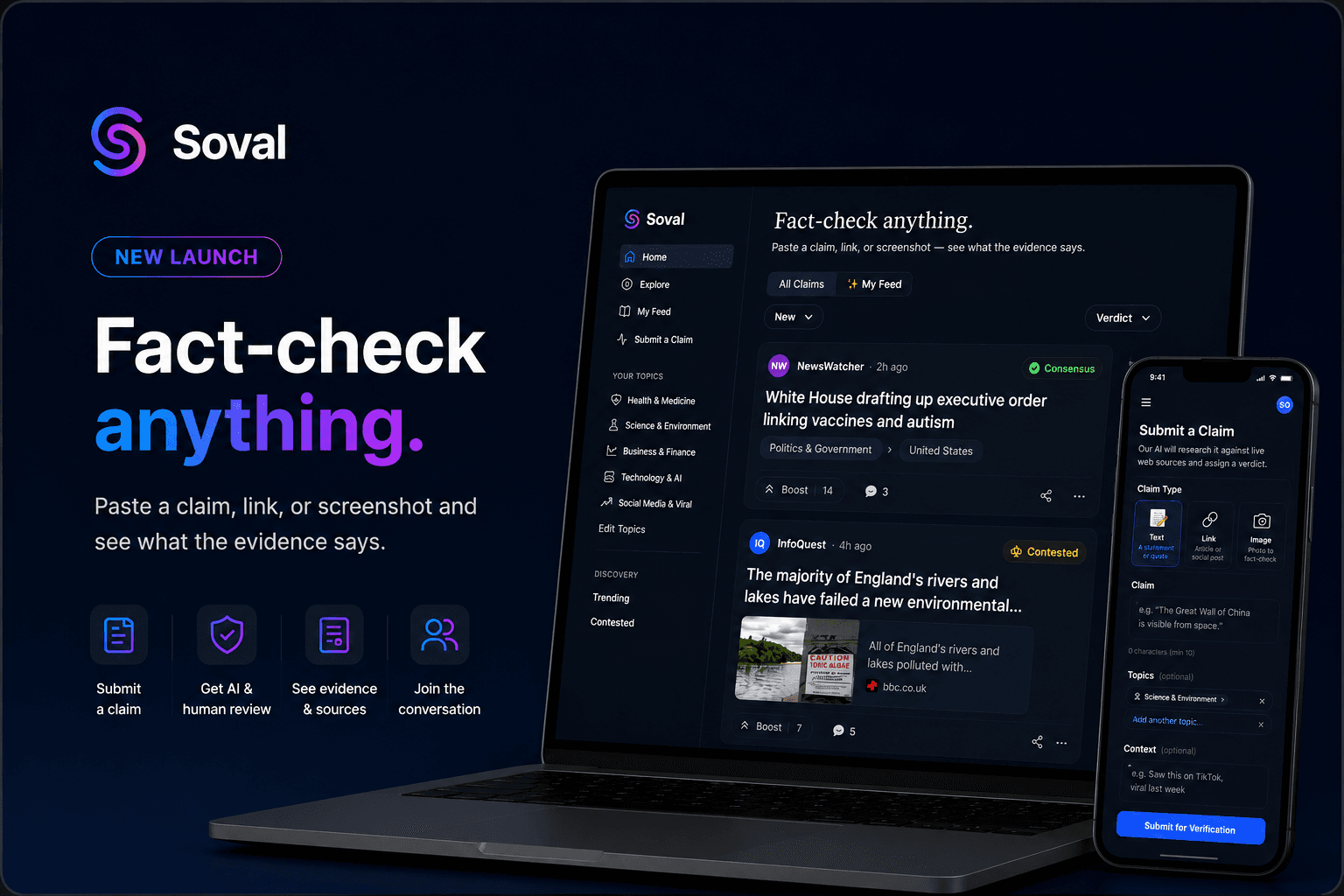
Soval is a new approach to online fact checking. Submit a claim, link or image, explore what is trending, review the evidence and see where credible sources agree or disagree.
athen
Soval Editorial
Meet Soval: A New Way to Fact Check Anything With the Evidence to Back It Up
The internet has never made it easier to discover information.
It has also never made it harder to know what deserves your trust.
A headline appears in your feed. Someone shares a screenshot. A video starts going viral. A claim spreads across TikTok, X, Instagram or Reddit before anyone has had time to establish whether it is accurate.
You can search for answers, but that can mean opening dozens of tabs and trying to work out which sources are credible. You can ask an AI chatbot, but you are still left wondering where the answer came from and whether the model missed something important.
That is the problem Soval was built to solve.
Soval is a claim verification platform that helps you investigate information, see the evidence behind an assessment and understand where credible sources agree or disagree.
Instead of asking you to simply trust another answer, Soval makes the verification process visible.
What Is Soval Social?
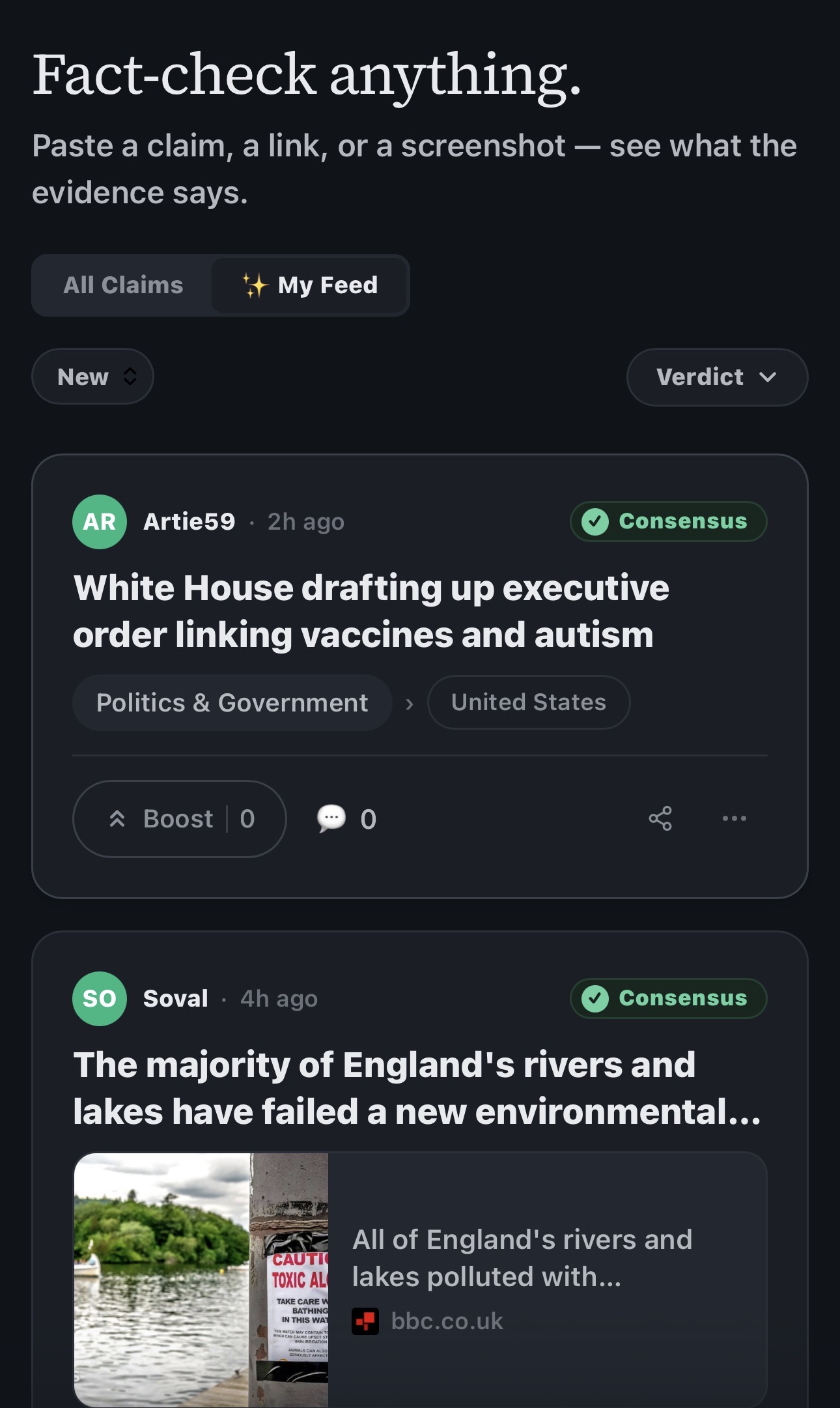
Soval Social is an AI powered platform for checking claims and understanding the information spreading online.
You can submit a statement, an article, a social media post or an image and have Soval research the claim against available sources. The platform then presents an evidence based assessment showing what the strongest sources say, where they agree, where they disagree and what remains uncertain.
The result is designed to be more useful than a simple “true” or “false.”
That distinction matters because information is rarely that simple.
A claim can be well supported. It can be contradicted by strong evidence. Credible sources can genuinely disagree. A breaking story can still be developing. Or there may simply not be enough quality evidence to reach a conclusion.
Soval’s five evidence states are designed to reflect those different situations rather than forcing every claim onto a single true to false scale.
Start With Anything You Are Unsure About
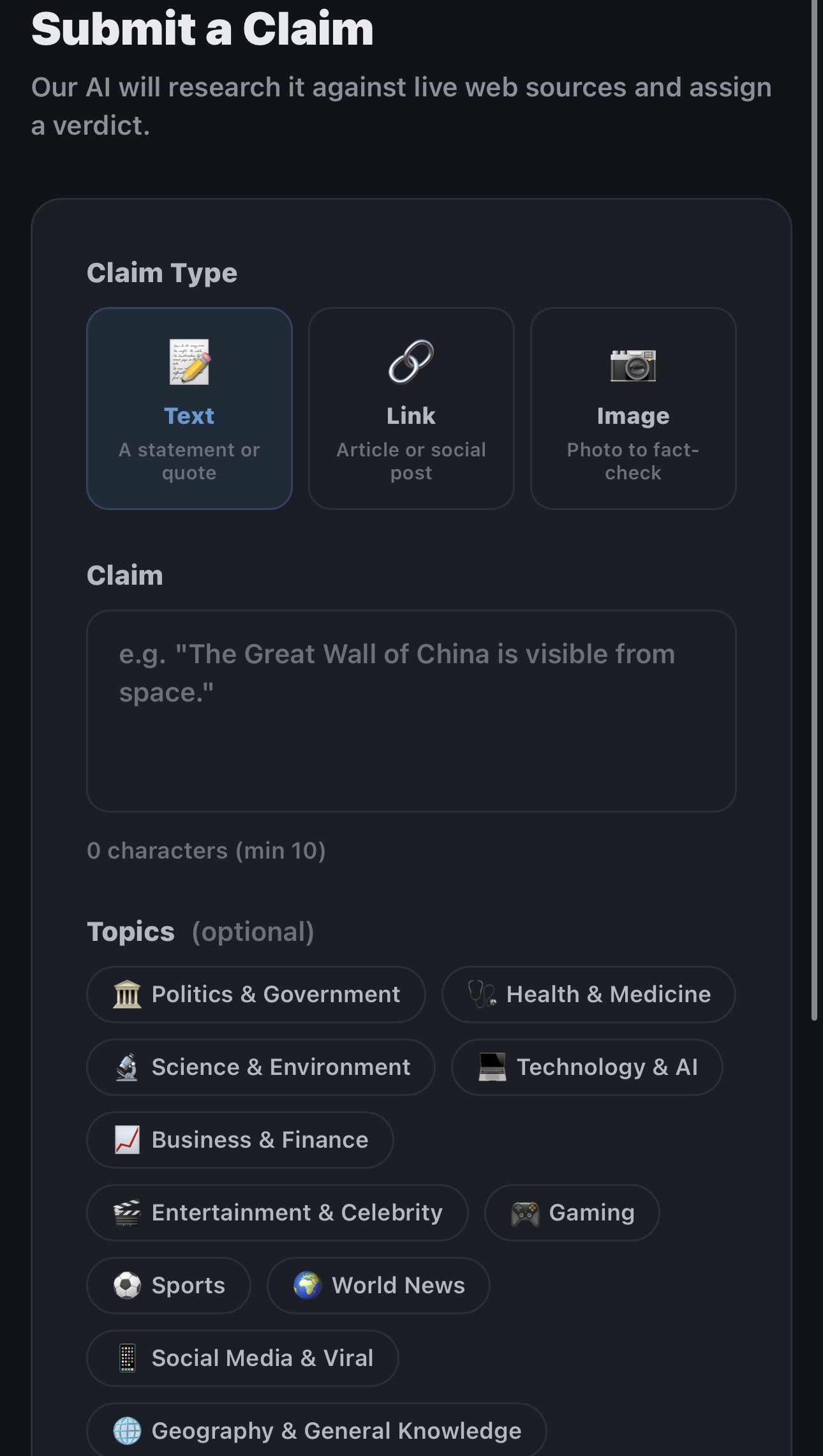
The fastest way to use Soval is simply to submit something you want to investigate.
From the Submit a Claim experience, you can choose between three types of content:
Text: Enter a statement, claim or quote.
Link: Submit an article or social media post.
Image: Upload a photograph or screenshot that you want to investigate.
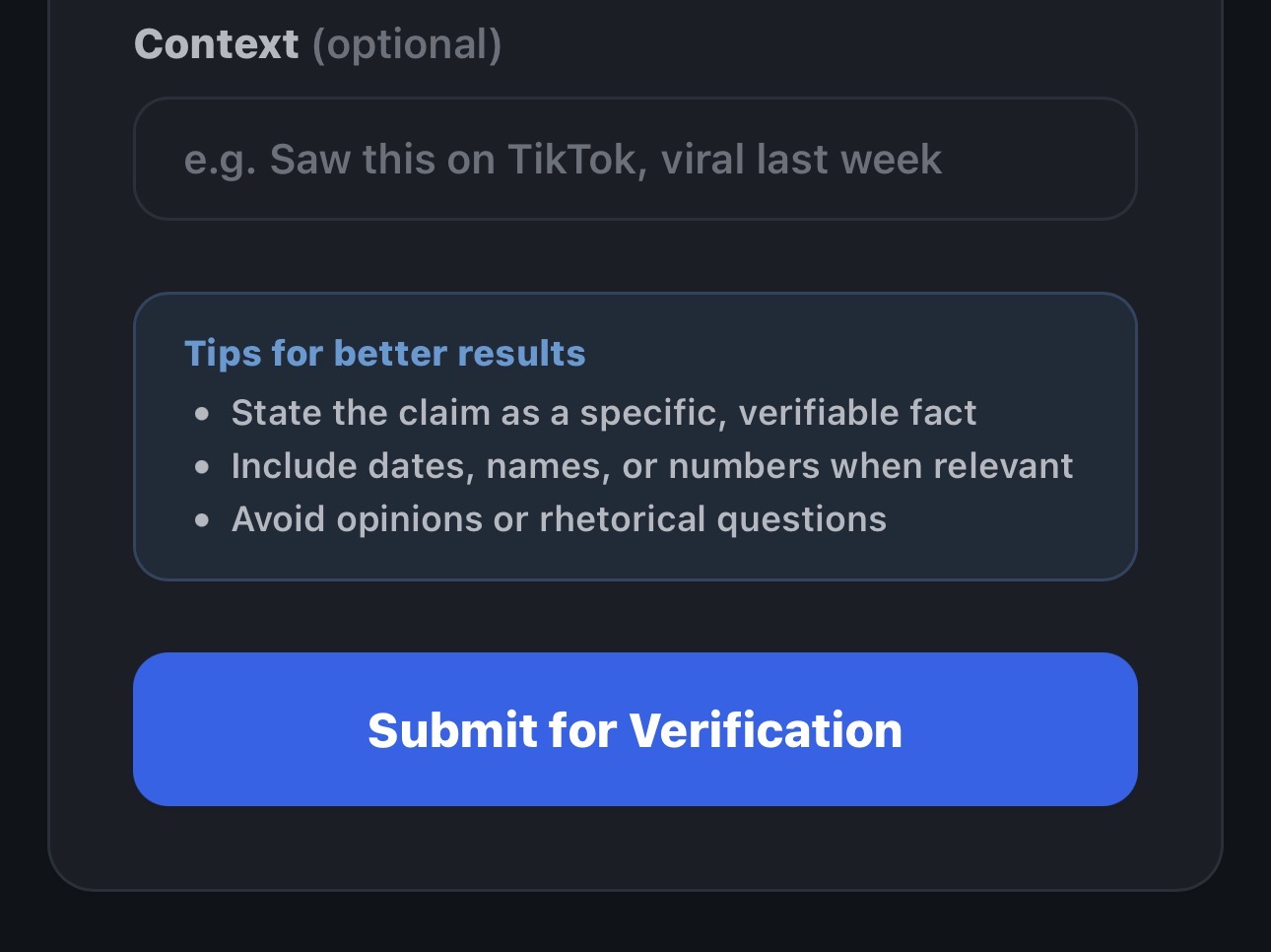
You can also add a topic to help categorize the claim and provide additional context about where you encountered it.
For example, you might explain that you saw the claim on TikTok, that it has been circulating for several days, or that the screenshot came from a particular account.
That context can help frame the claim being investigated.
Once you are ready, select Submit for Verification and let Soval investigate the available evidence.
You Can Fact Check More Than Articles
One of the most important parts of Soval is that verification does not have to start with a news article.
Some of the claims that matter most online never appear in a traditional news story.
They start as a post.
A screenshot.
A quote.
A video caption.
A statistic.
Or a message someone sends you and asks, “Is this actually true?”
That is why Soval lets you submit text, links and images rather than limiting verification to published articles.
If you are already using our guide on how to fact check a news article, Soval can be the next step when you want to investigate a claim directly rather than manually working through every source yourself.
See What Other People Are Checking
Fact checking does not have to be a solitary activity.
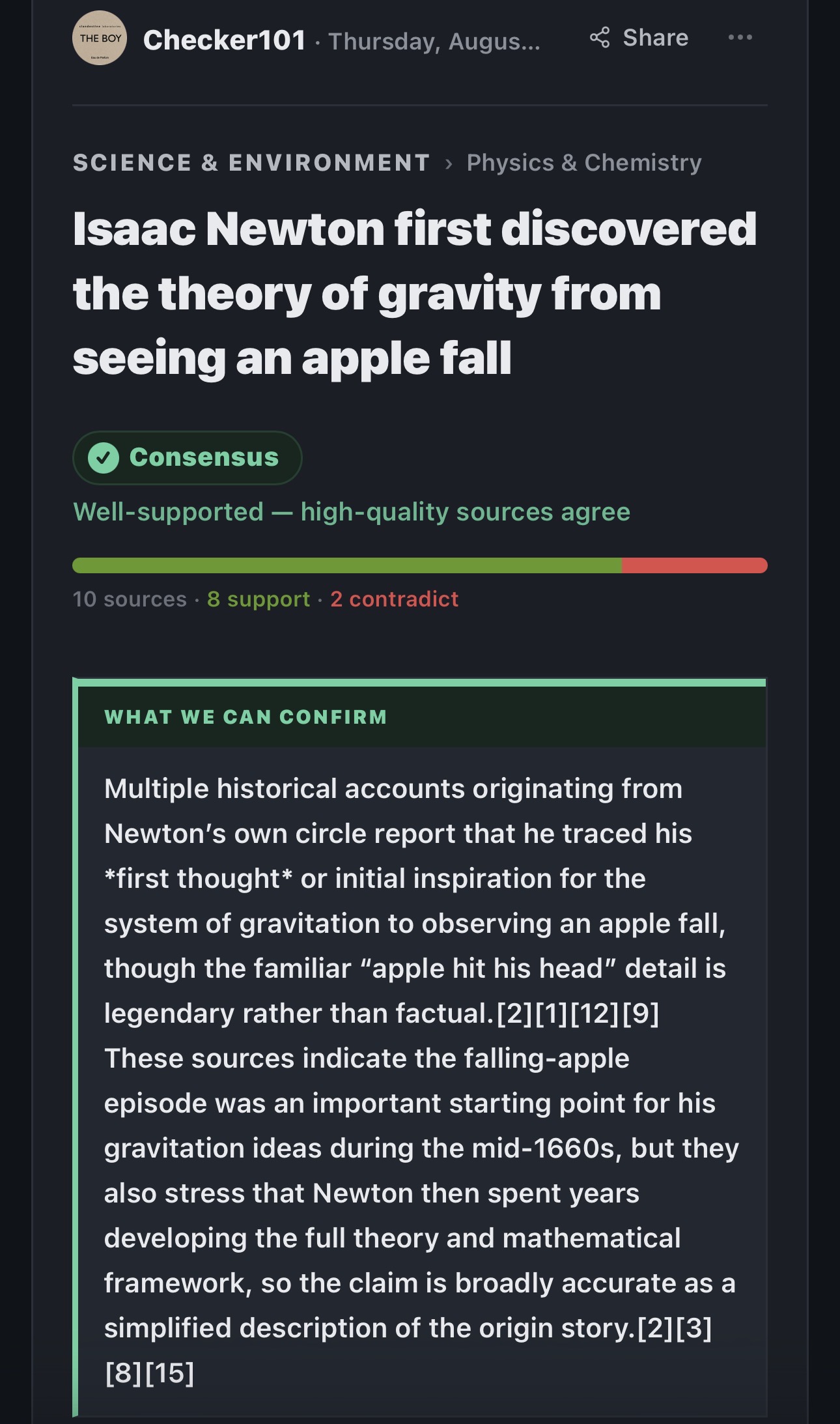
The Soval home experience gives you a way to discover claims that other people are investigating, with options to view All Claims or your personalized My Feed.
You can browse claims, see their current evidence state and open the underlying assessment to understand what the evidence says.
This turns Soval into more than a tool you visit only when something looks suspicious.
It becomes a place to discover what people are questioning and learn from the verification work that has already been done.
Find the Claims That Are Gaining Attention
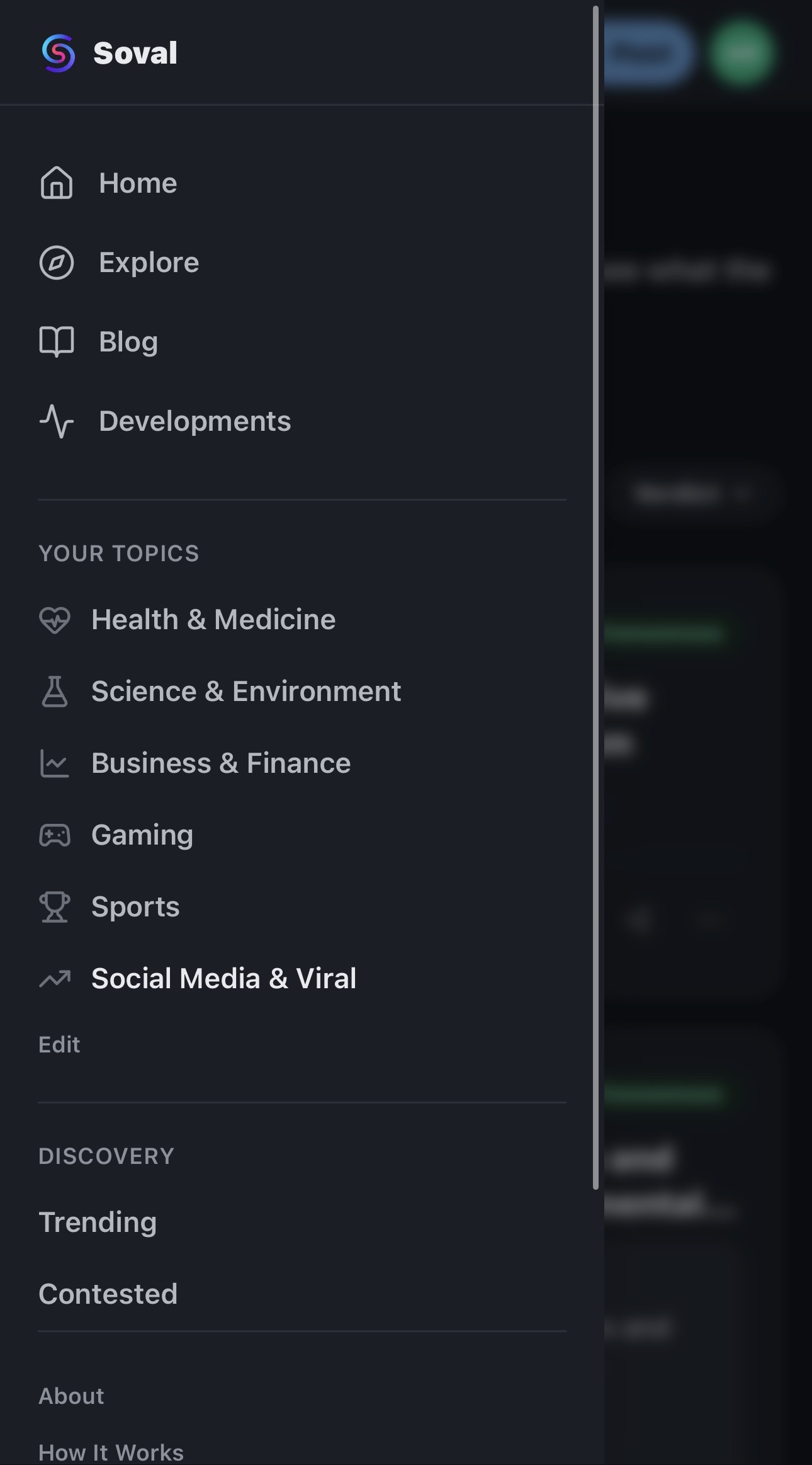
Soval also gives users dedicated discovery experiences for Trending and Contested claims.
Trending helps surface claims attracting attention across the platform, while Contested focuses on situations where credible sources genuinely disagree. The latter is particularly important because disagreement does not automatically mean that one side is spreading misinformation. Sometimes the evidence really is disputed.
That distinction is central to how Soval approaches verification.
If credible sources disagree, the platform is designed to show that disagreement rather than hide it behind an artificial percentage or force a misleading binary answer.
Understand What the Verdict Actually Means
Every verified Soval claim receives one of five evidence states:
Consensus
High quality sources agree and the available evidence strongly supports the claim.
Debunked
Strong evidence contradicts the claim.
Contested
Credible sources genuinely disagree and both sides of the evidence need to be considered.
Emerging
The story is developing and the evidence has not settled yet.
Insufficient Evidence
There is not enough quality evidence to reach a reliable conclusion.
These states are deliberately different from a simple confidence score.
Soval does not display a percentage such as “72 percent confident” because a number can create a false sense of precision. A claim with conflicting evidence is fundamentally different from a claim where very little evidence exists, even if an algorithm assigns both a similar numerical score.
You can learn more about how these classifications work in Soval’s Evidence States.
See the Evidence Behind the Assessment
This is where Soval’s approach is different.
The verdict is only one part of a claim assessment.
Soval also shows the sources behind the assessment and explains what the evidence says. Sources are identified according to their role in the assessment, including whether they support, contradict or remain neutral toward the claim. Source quality also matters, rather than simply counting how many websites mention something.
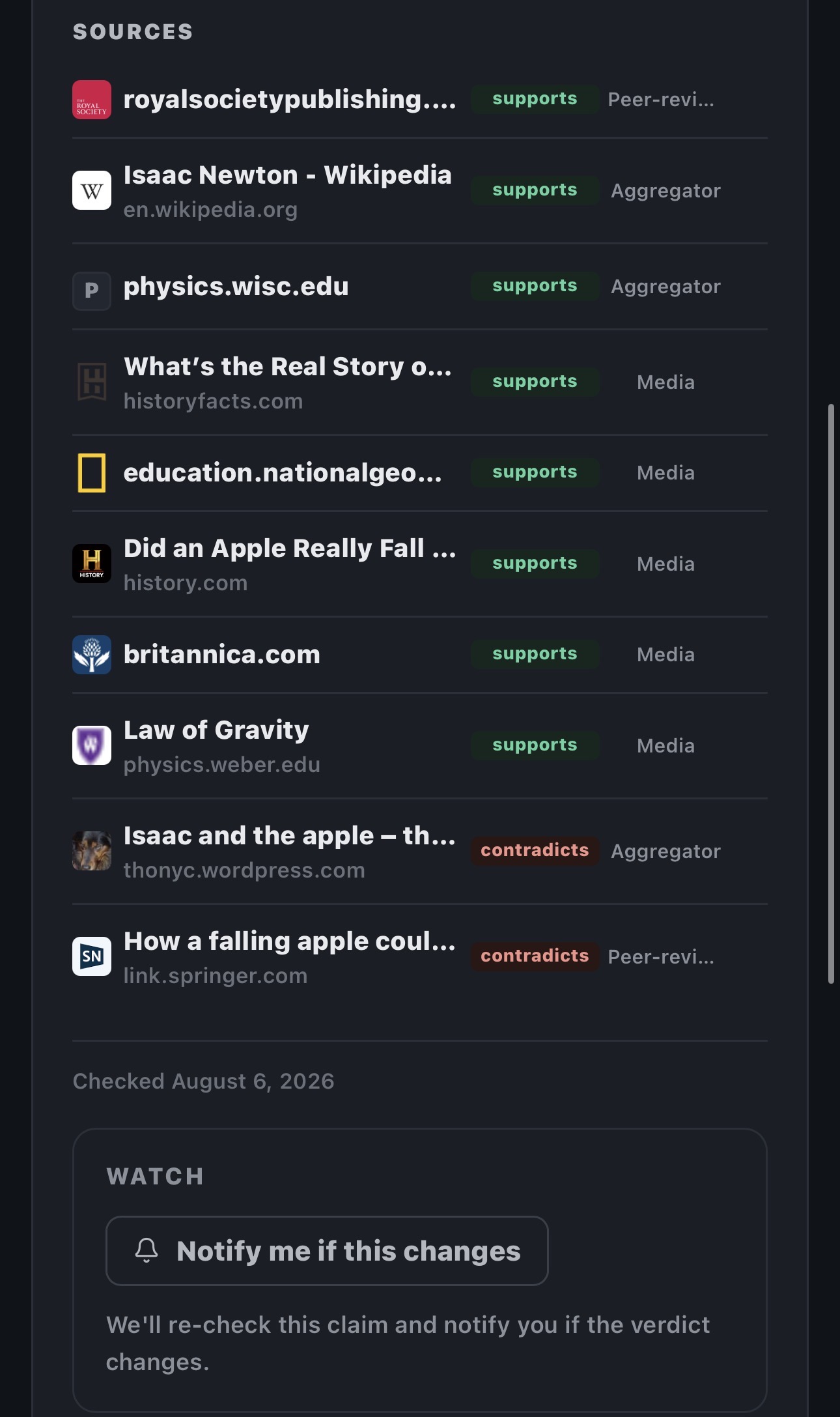
That means ten websites repeating the same claim do not automatically outweigh one authoritative primary source.
The evidence itself matters.
If you want to understand the methodology behind that approach, How Soval Works explains how claims move from submission through source gathering, evidence assessment and state assignment.
Add Context When You Know More
Verification works better when people can contribute useful information.
When submitting a claim, Soval gives you the option to add context about where you saw it or why you believe it is worth investigating.
The wider platform also allows members to contribute context and counter evidence to existing claims. If you believe an assessment is incorrect, claims can be challenged through the platform’s appeal process. Sustained disputes can be escalated for human review rather than being decided simply by the number of people voting one way or another.
Follow Information as It Changes
Some claims can be settled quickly.
Others cannot.
A developing news story may look very different several hours later as official statements are released, new reporting emerges or previously unknown evidence becomes available.
Soval treats those situations differently.
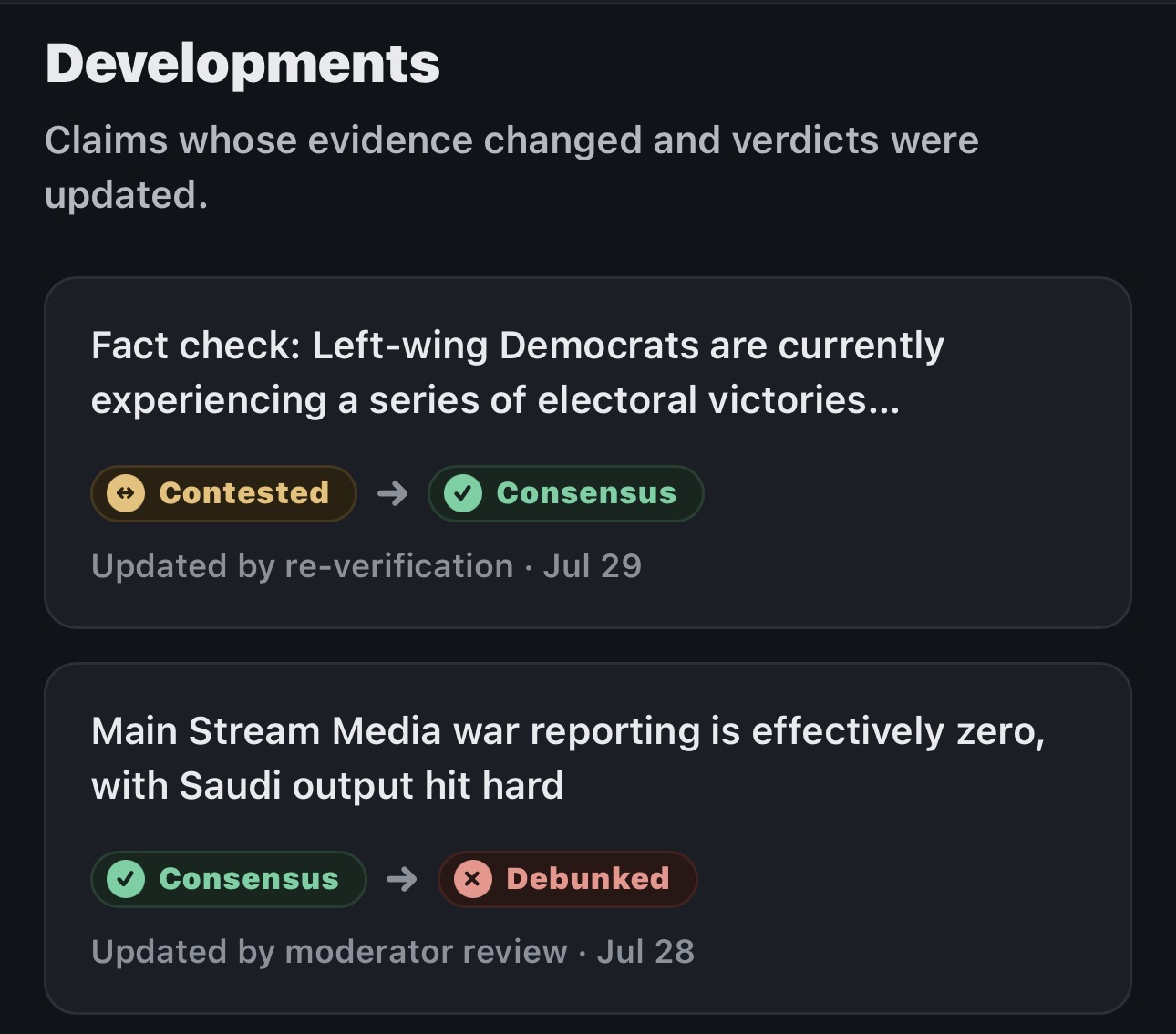
Claims marked as Emerging are identified as developing rather than being presented as permanent conclusions. The platform can revisit claims as new evidence becomes available, with the history of what changed remaining visible.
That is important because a good fact check should reflect the evidence available today without pretending that today’s information will always be the final word.
Soval Is Built for the Moment You Ask, “Is This Actually True?”
The most useful fact checking tool is not necessarily the one with the longest database of published articles.
It is the one you can use when you encounter something you are unsure about.
Maybe a family member sent you a screenshot.
Maybe a post is suddenly going viral.
Maybe a headline seems too outrageous to be true.
Maybe two reputable publications are reporting the story differently.
Or maybe you simply want to understand the evidence before passing something along.
That is the experience Soval is designed around.
See something questionable. Submit it. Review the evidence. Understand the assessment. Make your own informed decision.
Frequently Asked Questions (FAQ)
What is Soval Social?
Soval Social is an AI powered claim verification platform that researches online claims against available sources and presents an evidence based assessment. It shows the sources behind a conclusion and distinguishes between situations such as consensus, disagreement, developing stories and insufficient evidence.
How do I use Soval to fact check something?
You can submit a claim as text, a link or an image. You can optionally select relevant topics and provide context before submitting it for verification. Soval then researches the claim and provides an evidence based assessment.
Can Soval fact check social media posts?
Yes. Soval allows users to submit links and images as well as text claims, making it possible to investigate information encountered on social media and other online platforms.
Does Soval only give true or false answers?
No. Soval uses five evidence states: Consensus, Debunked, Contested, Emerging and Insufficient Evidence. The states are designed to represent different evidence situations rather than reducing every claim to a simple true or false answer.
Does Soval show the sources behind a fact check?
Yes. Soval’s assessments include the sources used to evaluate the claim and information about how those sources relate to the claim. The platform is designed around making the evidence behind an assessment visible.
Can users challenge a Soval verdict?
Yes. Users can contribute context and counter evidence, and claims can be appealed. Sustained disputes can be escalated for human review.