What Is Evidence-Based Fact Checking?
Learn what evidence-based fact checking means, how it works, why source quality matters, and how Soval uses evidence to verify online claims.
athen
Soval Editorial
What Is Evidence-Based Fact Checking?
Evidence-based fact checking is the process of evaluating a factual claim against credible evidence, rather than relying on opinion, repetition, or an AI-generated answer. It means looking at the quality of the available sources, comparing evidence that supports or contradicts a claim, and being transparent about what remains uncertain.
That distinction matters in a world where a claim can go viral long before anyone has verified it.
A screenshot can look authentic. A headline can be technically accurate but misleading. Hundreds of websites can repeat the same claim without any of them being the original source.
Evidence-based fact checking asks a more important question:
What does the evidence actually show?
How does evidence-based fact checking work?
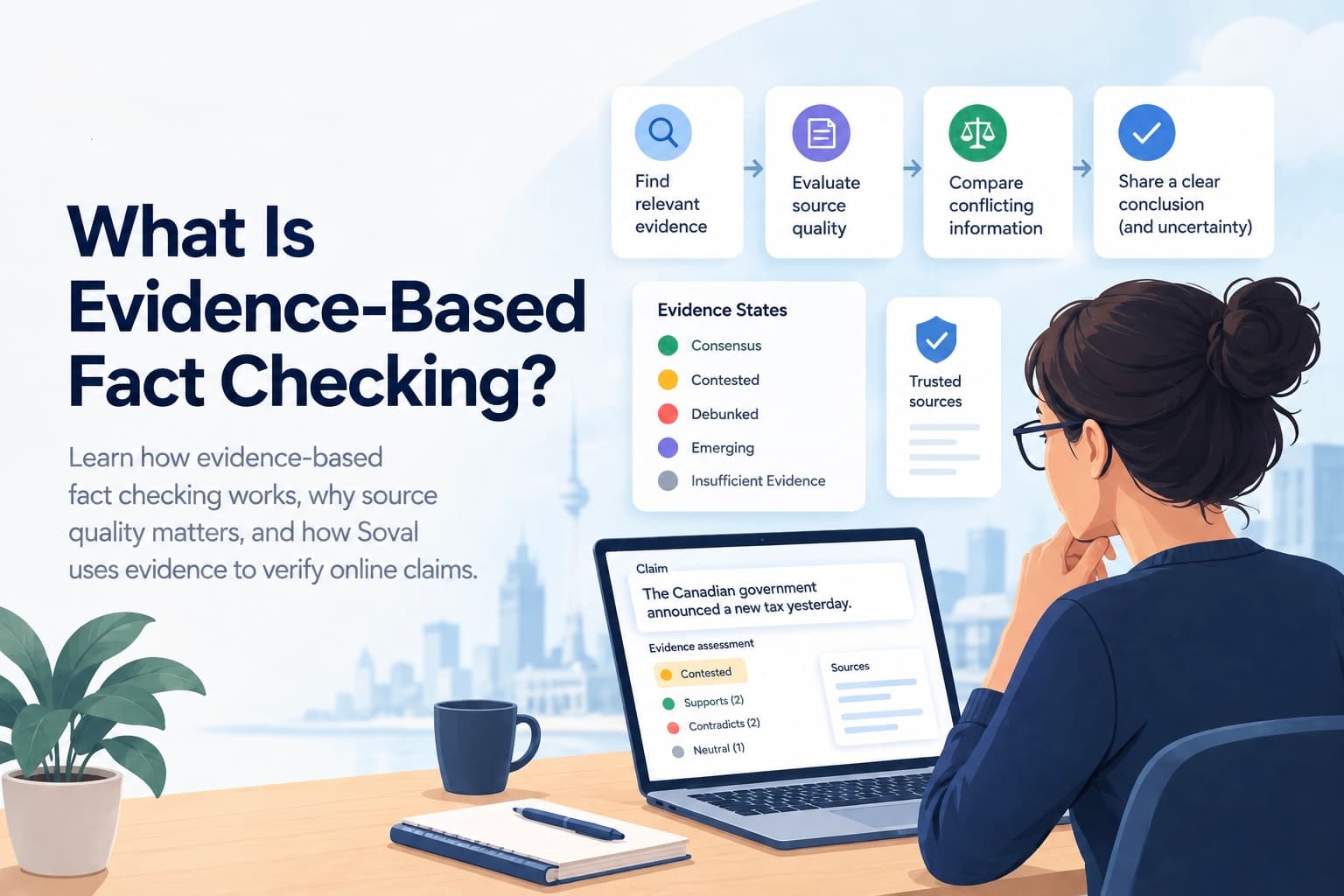
A typical evidence-based fact check involves five steps:
Identify the claim
Separate the factual assertion from opinions, speculation or commentary.Find relevant evidence
Search for primary sources, official records, research, expert analysis and reputable reporting.Evaluate the sources
Consider who produced the information, how authoritative it is and whether it directly addresses the claim.Compare the evidence
Look at both supporting and contradictory evidence rather than simply counting how many websites agree.Communicate the conclusion and uncertainty
A claim may be well supported, contradicted, genuinely disputed, still developing or impossible to determine with the available evidence.
This is what separates evidence-based fact checking from simply asking an AI chatbot, “Is this true?”
Why does evidence matter in fact checking?
The number of sources mentioning a claim does not necessarily determine whether the claim is accurate.
Ten websites may repeat the same information because they all copied one original report. Meanwhile, a single government document, scientific paper or court record may provide much stronger evidence.
Evidence-based fact checking therefore considers source quality and relevance, not just quantity.
It also recognizes that some claims cannot responsibly be reduced to “true” or “false.”
A developing news story may have credible evidence on both sides. A claim may have some supporting evidence but important unanswered questions. Or there may simply not be enough reliable information to reach a conclusion.
How Soval uses evidence-based fact checking
Soval Social applies this approach to claims people encounter online.
You can submit a claim, link, social media post or image, and Soval researches the available evidence. The assessment then shows the sources behind the result and how those sources relate to the claim. (Soval)
Instead of forcing every investigation into a simple true-or-false answer, Soval uses five Evidence States:
Consensus: High-quality evidence broadly supports the claim.
Debunked: Strong evidence contradicts the claim.
Contested: Credible sources genuinely disagree.
Emerging: The story is still developing.
Insufficient Evidence: There isn’t enough quality evidence to reach a reliable conclusion.
You can learn how Soval’s Evidence States work and see how claims move from submission through source gathering and evidence assessment.
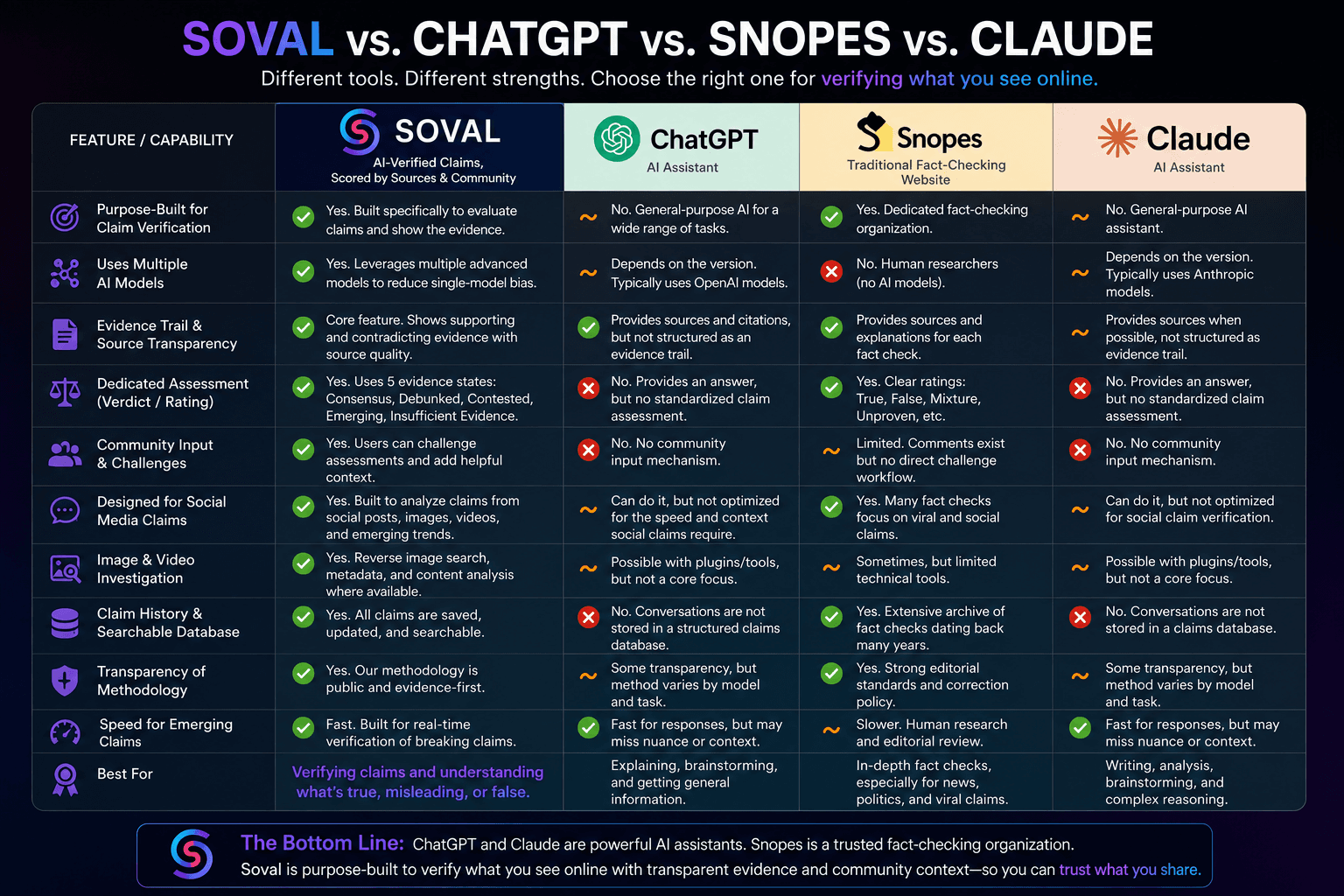
Evidence-based fact checking vs. AI answers
A general-purpose AI chatbot can produce a convincing answer without necessarily giving you enough information to evaluate how that answer was reached.
Evidence-based fact checking puts the evidence first.
The goal isn’t simply to produce an answer. It’s to help you understand:
What sources were consulted
What evidence supports the claim
What evidence contradicts it
Whether credible sources disagree
What remains unknown
That’s why Soval’s assessments include an evidence trail rather than relying on a single confidence percentage. (Soval)
For example, Soval has used the approach on claims ranging from viral social media screenshots to scientific stories and breaking news. Its claim assessments show the evidence supporting or contradicting the claim and explain where uncertainty remains. (Soval)
Why uncertainty is part of good fact checking
One of the most important principles of evidence-based fact checking is that “we don’t know yet” can be a legitimate conclusion.
If a story is developing, new evidence may change the picture. If credible sources disagree, hiding that disagreement can create a misleading impression of certainty.
A good fact check should therefore make uncertainty visible instead of pretending that every question has an immediate answer.
That’s the idea behind Soval’s Emerging and Insufficient Evidence states.
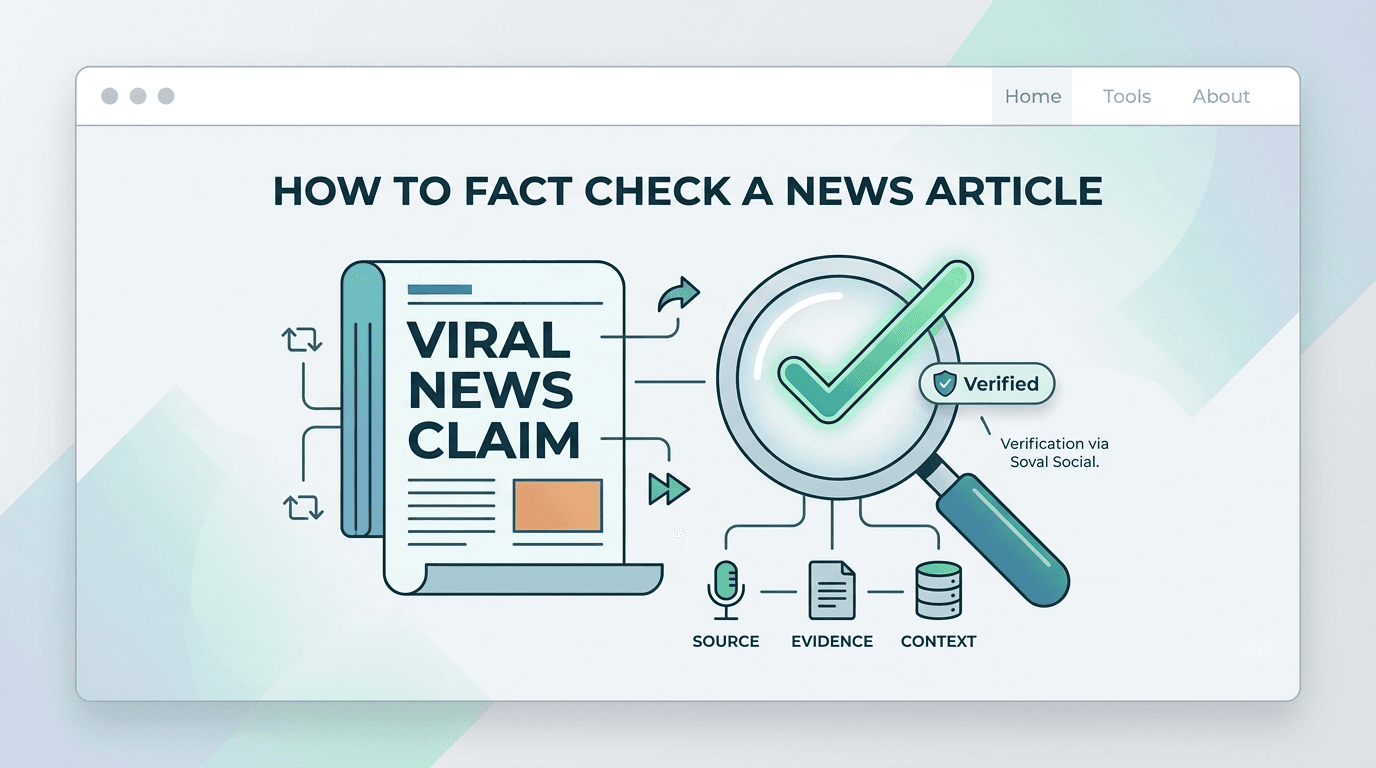
You can also read How to Fact Check a News Article for a practical step-by-step verification workflow.
The bottom line
Evidence-based fact checking isn’t about trusting an algorithm. It’s about following the evidence.
The best verification process makes it easier to find credible sources, understand conflicting information and recognize when the evidence isn’t strong enough to support a conclusion.
That’s the approach Soval is built around.
See something you’re not sure about? Submit a claim to Soval and explore the evidence for yourself.